Friday, May 25, 2012

Observation Quarter 4 Part 2


Wednesday May 23, 2012
2 hours
mars
saturn
bootes
gemini
virgo
ursa minor
leo
gemini
cancer
hydra
hercules
cassiopeia
ursa minor
cepheus
cygnus

APOD 4.8


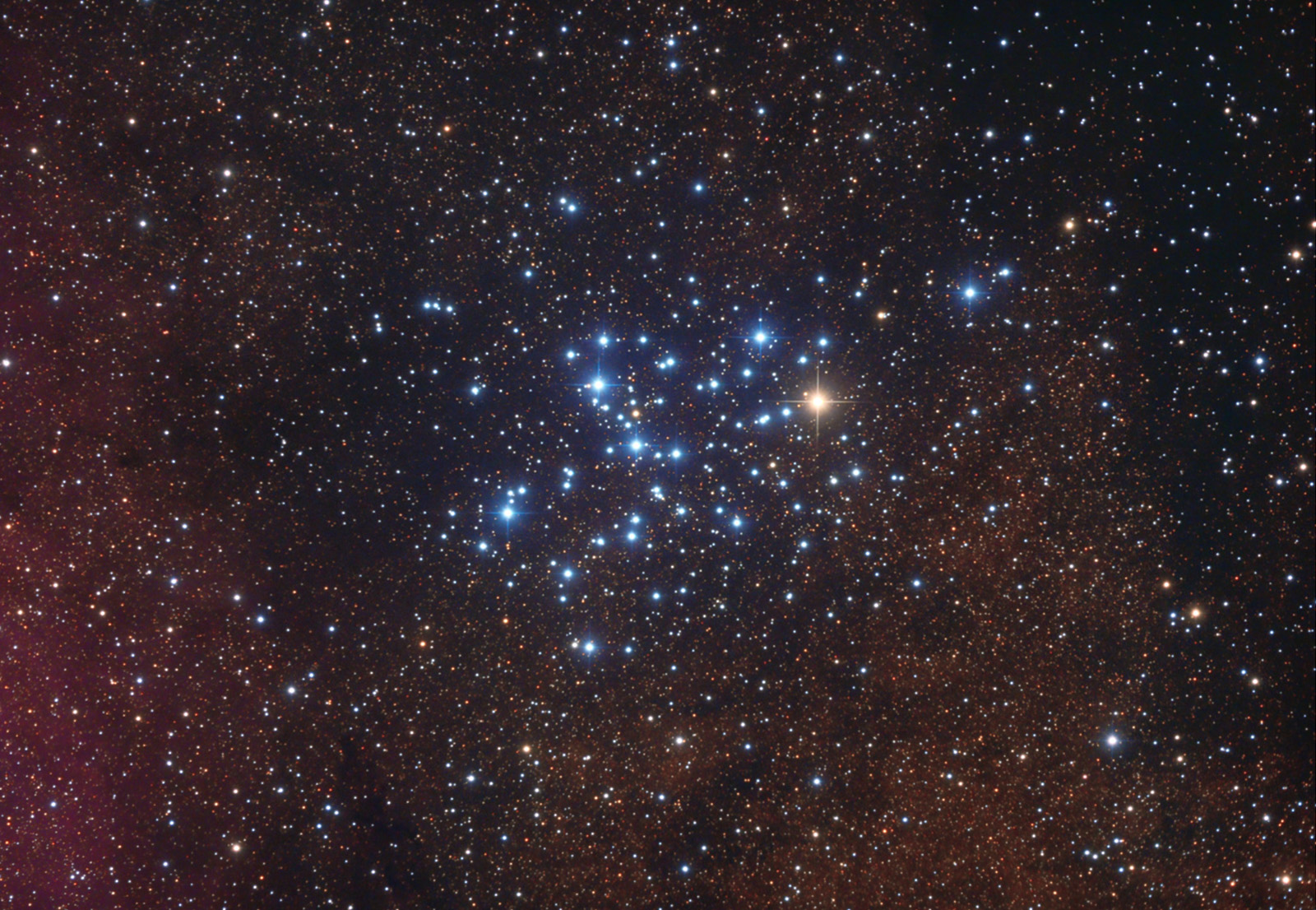
M6: Butterfly Cluster (NGC 6405)
The Butterfly Cluster is a Messier object located in the constellation Scorpius.  It is a an open cluster, a relatively young group of stars that were born at the same time.  This cluster is about 1200 light years away from Earth.  Its name comes from its shape, because it looks liked a butterfly to astronomers; however, I don't see the butterfly.  The blue color comes from the stars which are very hot, blue-white stars.  However, the brightest star is an orange, supergiant star called BM Scorpii.  The overall brightness of this cluster is 4.2 magnitude.  It is easiest to see this cluster on a dark night, and I will look for it next time I look up to observe the stars.

Wednesday, May 23, 2012

Zooniverse

I first started working and doing the section that said "How Galaxies Work" and after I worked on it for 2 class periods, I began to work in the climate section of Zooniverse.
I have so far spent 2 class periods analyzing and documenting the varying pattern changes as the "ship" moved through oceans and various parts of the globe.

Sources Biography

http://www.esa.int/esaSC/SEMBPC2PGQD_index_0.html
http://www.phys-astro.sonoma.edu/brucemedalists/oort/

Monday, May 21, 2012

Jan Oort Biography

(1900–1992)

A Dutch astronomer who made major contributions to our knowledge of the structure and rotation of the Milky Way Galaxy. More or less as a sideline, Oort studied comets as well and provided evidence for his theory, now widely accepted, that the Sun is surrounded by a distant cloud of ice-rock objects that has become known as the Oort Cloud. Oort studied stellar dynamics under Jacobus Kapteyn at Groningen and worked at the University of Leiden from 1924 to 1992. In 1927 he confirmed Bertil Lindblad's hypothesis of galactic rotation by analyzing motions of distant stars. During World War II Oort started his compatriot Hendrik van de Hulst on the successful search for the 21-cm line of neutral hydrogen and after the war led the Dutch group that used the 21-cm line to map the layout of the Galaxy, including the large-scale spiral structure, the galactic center, and gas-cloud motions. In 1950, based on his analysis of the well-measured orbits of 19 long-period comets, Oort proposed the existence of a vast repository of frozen cometary nuclei. He later showed that light from the Crab Nebula is polarized, confirming Iosif Shklovskii's suggestion that the emission is largely due to synchrotron radiation.


Thursday, May 17, 2012

APOD 4.7


M6: Butterfly Cluster (NGC 6405)


The Butterfly Cluster is a Messier object located in the constellation Scorpius.  It is a an open cluster, a relatively young group of stars that were born at the same time.  This cluster is about 1200 light years away from Earth.  Its name comes from its shape, because it looks liked a butterfly to astronomers; however, I don't see the butterfly.  The blue color comes from the stars which are very hot, blue-white stars.  However, the brightest star is an orange, supergiant star called BM Scorpii.  The overall brightness of this cluster is 4.2 magnitude.  It is easiest to see this cluster on a dark night, and I will look for it next time I look up to observe the stars. 

APOD 4.6


See Explanation.  Clicking on the picture will download
 the highest resolution version available.
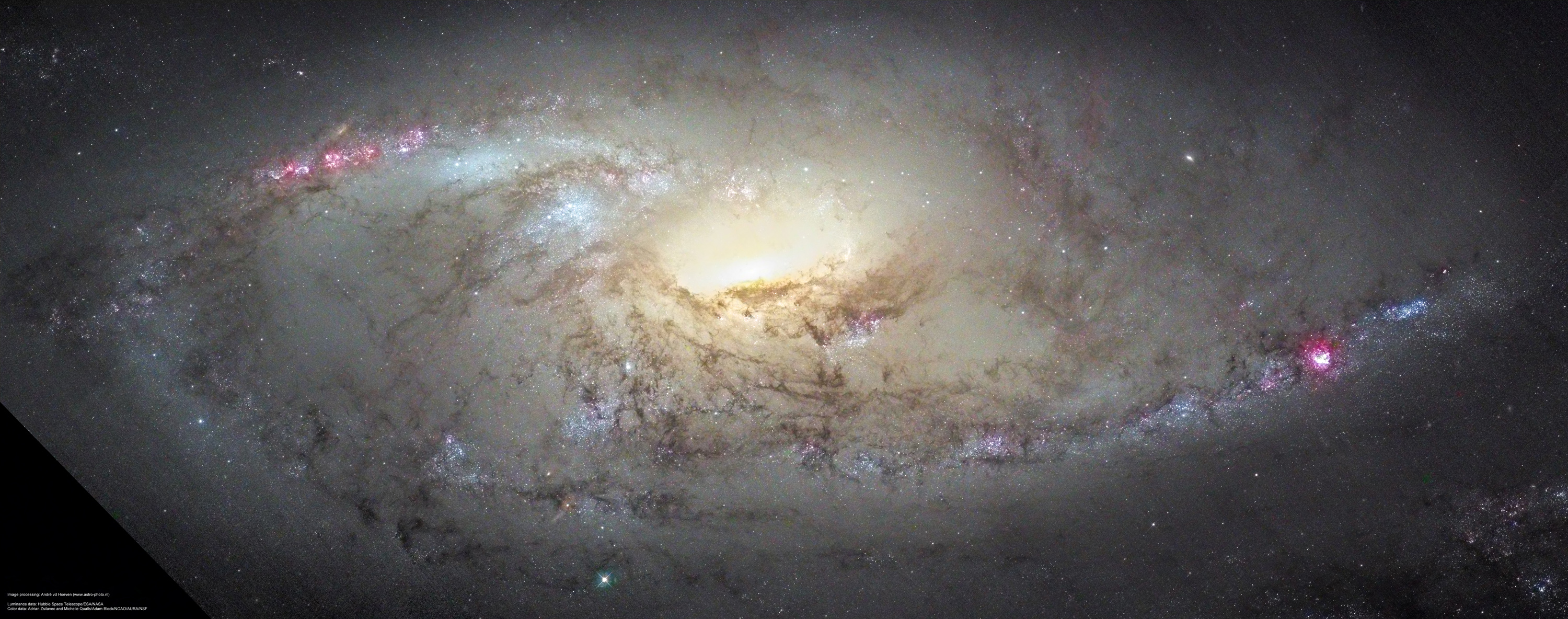
This is a picture of M106.  It is an active spiral galaxy located in the constellations of Ursa Major and Canes Venatici.  It is 30 thousand light years wide and 21 million light-years away from earth, receding 537 km/sec .  Similar to the Andromeda galaxy, it has dust lanes and spiral arms.  The reddish parts are stellar nurseries that are filled with young bliue stars.

Monday, April 30, 2012

Observations Quarter 4

     Yesterday, we were told in class to step outside (at night) to see Jupiter and Venus in conjunction because it was the last night we would have a good view of this event.  Although I had seen this over spring break pretty clearly since I was able to stay up later, I decided to go out last night and look for Jupiter, Venus, and the moon.  I drove a bit past my neighborhood since it is well lit and once I got to a spot on the road where it was dark I pulled over (I was not alone) and stepped out of my car.  I was able to see Jupiter and Venus in a straight line with the moon rather clearly.  My mom (who was with me) was also able to see it and she was quite surprised because she really has no idea what to look for.  It was definitely an interesting and beautiful thing to see/share and I'm glad there was something different to observe.

Tuesday, April 24, 2012

APOD 4.5

See Explanation.  Clicking on the picture will download
 the highest resolution version available.

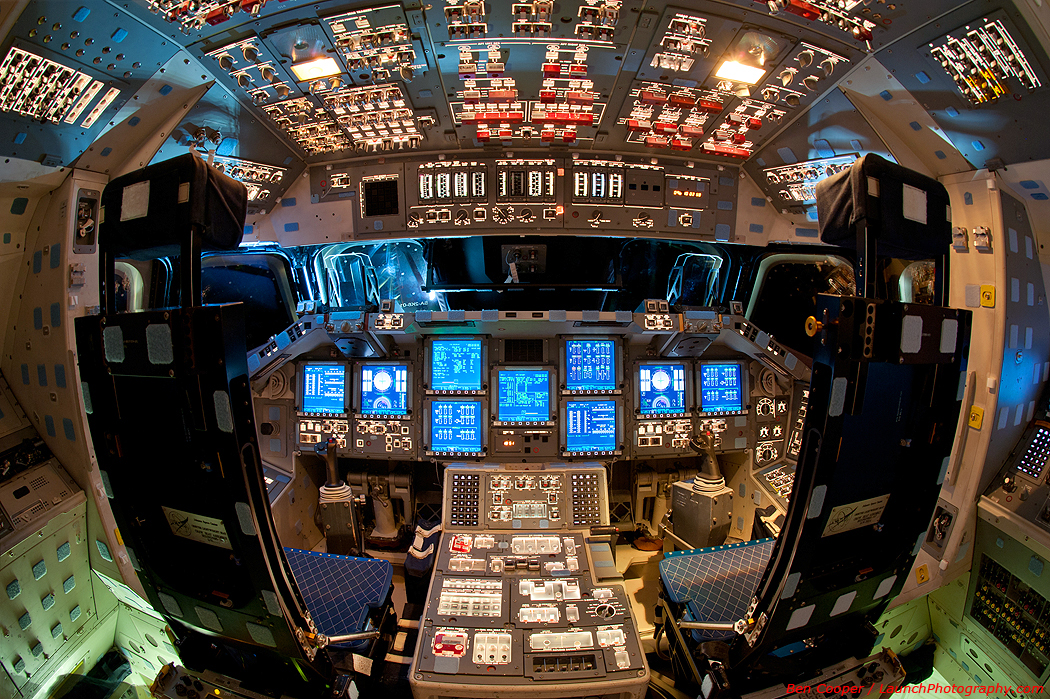
The Flight Deck of Space Shuttle Endeavor

     Endeavor is the second to last space shuttle ever launched by NASA.  It is capable of entering the Earth's atmosphere at speeds greater than the speed of sound.  Since it is now retired, it is going to be sent to the California Space Center in Los Angeles, California.  Although it is exciting that we will be able to see space shuttles up close in museums now, I cannot help but be depressed by the shuttles retirement.  After all, without being able to use the space shuttle for real missions, it's like viewing a more complex version of  Disney's "Mission Space" ride.

APOD 4.4

See Explanation.  Clicking on the picture will download 
the highest resolution version available.
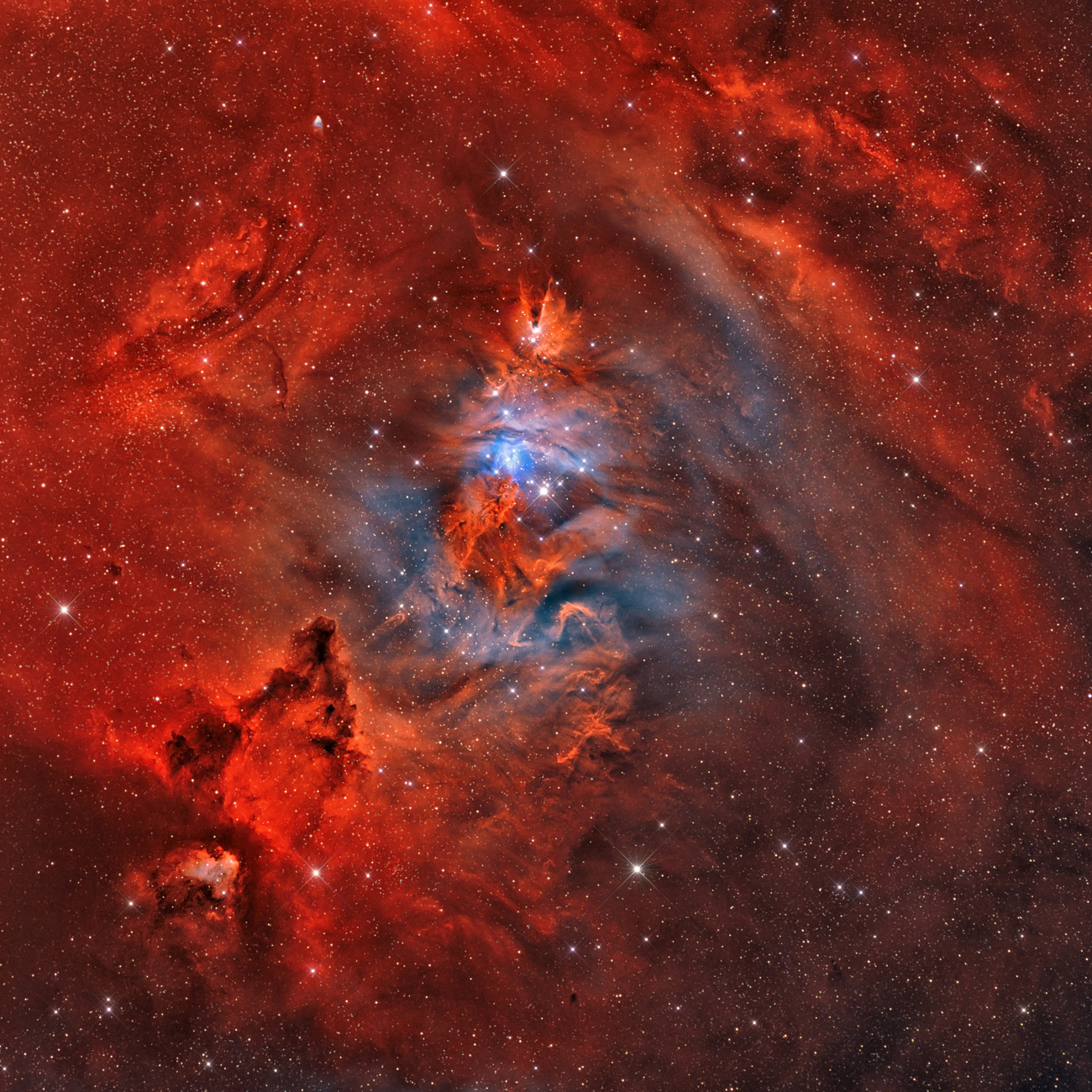
     The above picture is of the constellation Monoceros, star forming region NGC 2264.  It is roughly 2700 light-years in distance.  It mixes red emission nebulae and blue reflection nebulae.  This picture specifically includes the Fox Fur Nebula, the Cone Nebula, and S Mon (a young dwarf star which gives the photo a blue glow).  The red color in the photo and the Cone Nebula is produced by hydrogen gas.

APOD 4.3

See Explanation.  Clicking on the picture will download 
the highest resolution version available.
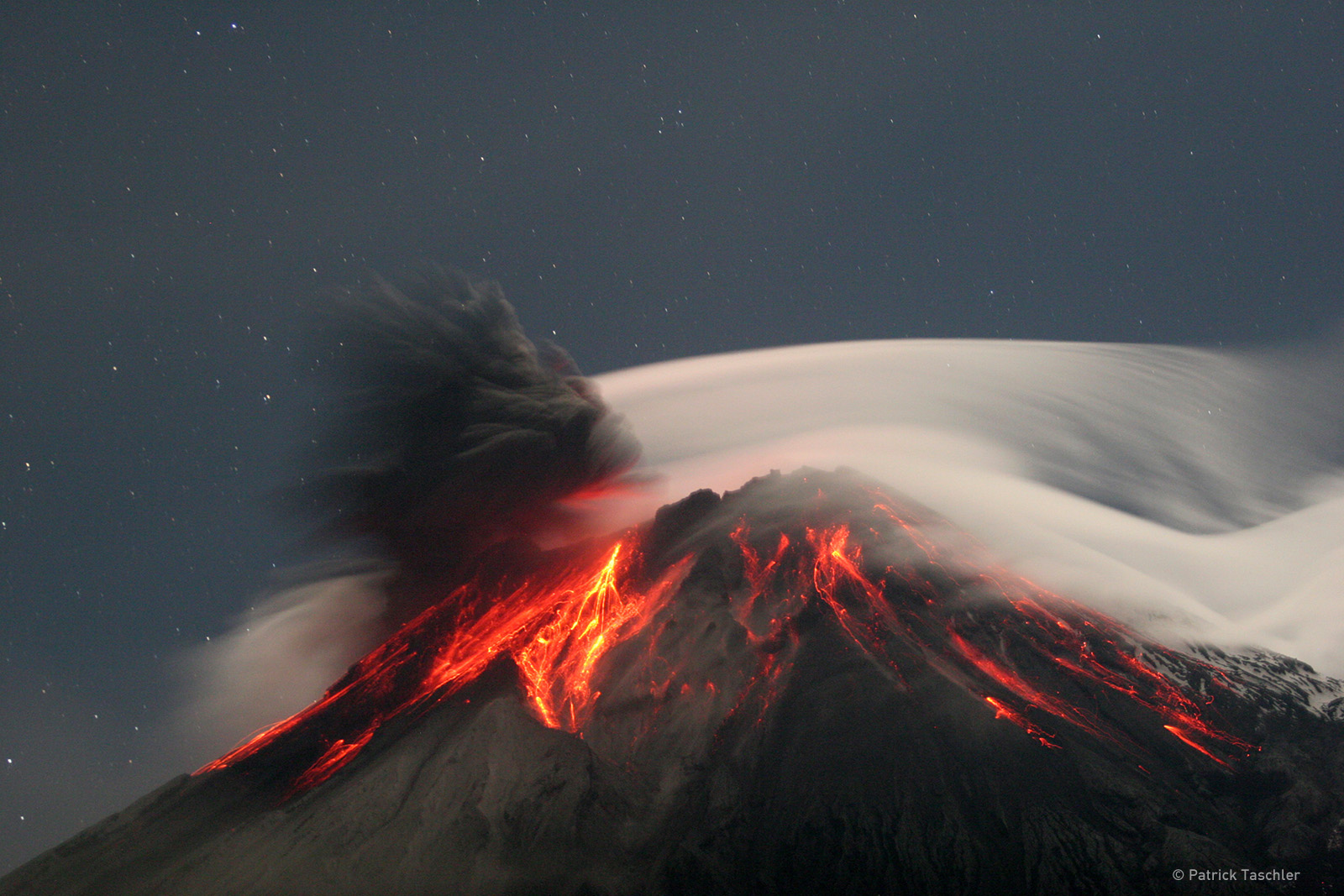
  This photo of Tungurahua (a volcano) was caputured in Ecuador in 2006.  It is 5,000 meters high so there are white clouds that flow around the peak of the volcano.  The black smoke in the picture is actually dark ash being ejected by the volcano.  Also visible in the background of the photo are stars.

APOD 4.2

See Explanation.  Clicking on the picture will download
 the highest resolution version available.

Two days ago, NASA launched five sounding rockets from the Wallops Flight Facility located in Virginia.  This photo shows the clouds that the chemical tracer left by the rockets in the Earth's ionosphere (starting at about 80 km).  The clouds were able to be seen in the mid-atlantic (this picture specifically captured in New Jersey).  Sagittarius and Scorpius are also visible in the background of this picture.

APOD 4.1

See Explanation.  Clicking on the picture will download
 the highest resolution version available.

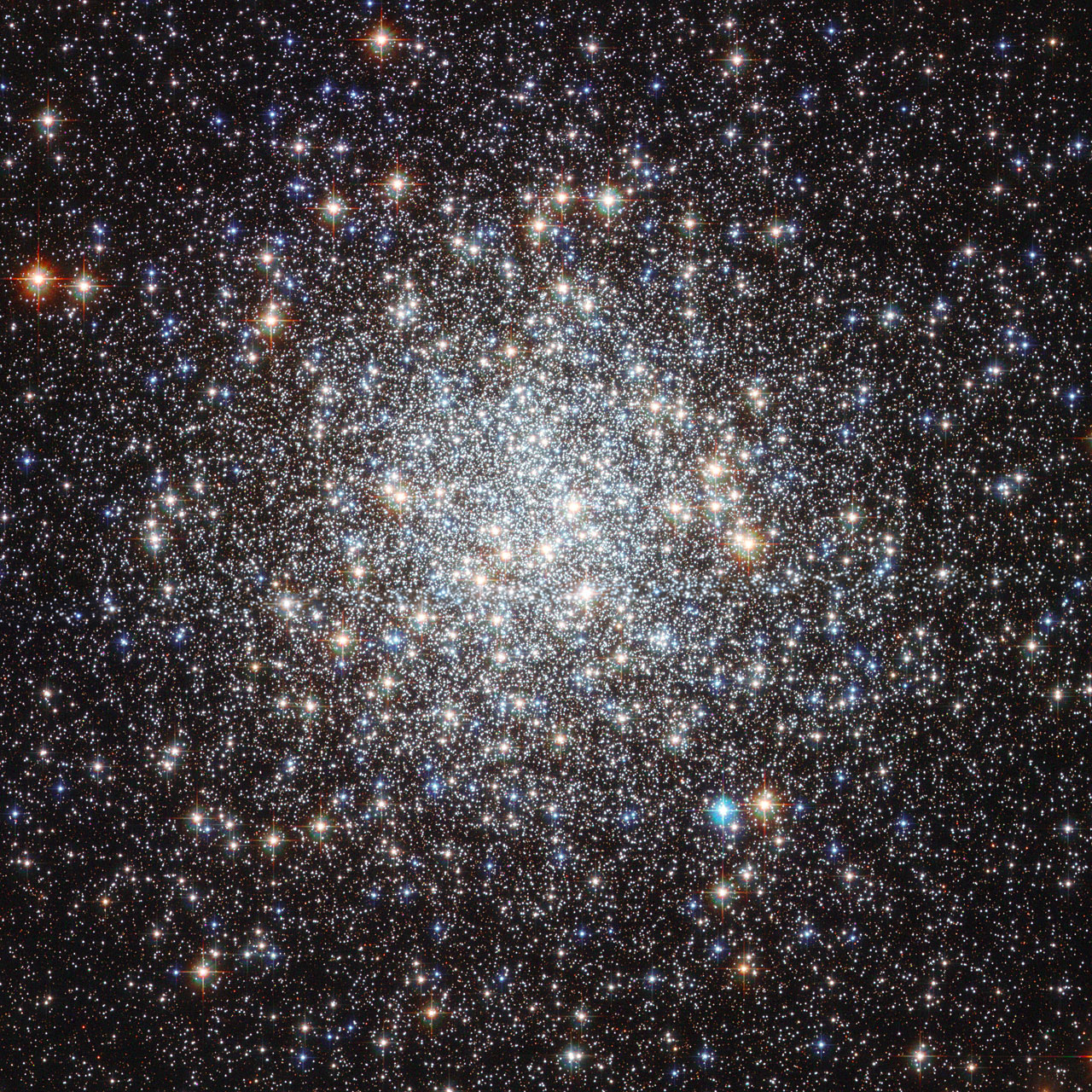
     M9 is a globular cluster containing over 300,000 stars and has a diameter of roughly 90 light-years.  It is near the center of the Milky Way galaxy and is about 25,000 light-years away.  It is at least two years older than the Sun.

Monday, March 26, 2012

APOD 3.5


 The scene is dominated by the reddish glow of the Great Carina Nebula, one of our galaxy's largest star forming regions. In fact, the remarkable skyscape is not a composite of varying exposures or a photomontage. Far from sources of light pollution, the landscape illuminated by starlight and the Milky Way above were recorded by a modified digital camera and fast lens. The sensitive system captured both planet Earth and deep sky in a relatively short exposure. 

APOD 3.6


Five hand drawn sketches of Jupiter were used to create this beautifully detailed flat map of the ruling gas giant's turbulent cloud tops. Made with colored pencils at the eyepiece of a 16 inch diameter telescope, the original drawings are about 5 inches (12.5 cm) in diameter. The drawn planisphere map dimensions are 16x8 inches (40x20 cm). Observing on different dates in November and December of 2011, astronomical artist Fred Burgeot has relied on Jupiter's rotation to cover the planet's complete circumference. 

Observations Q3 Part 2

Friday 3/4/12 : 4 hour
 ~ 7 i saw jupiter mercury and venus all lined up and mercury was really red and dim
later that night i saw many constellations, almost all studied in class including canus major and minor, orion, gemeni, sirius, columba, lepus, taurus, and auriga

APOD 3.7


 Colorful NGC 1579 resembles the better known Trifid Nebula, but lies much farther north in planet Earth's sky, in the heroic constellation Perseus. About 2,100 light-years away and 3 light-years across, NGC 1579 is, like the Trifid, a study in contrasting blue and red colors, with dark dust lanes prominent in the nebula's central regions. In both, dust reflects starlight to produce beautiful blue reflection nebulae. But unlike the Trifid, in NGC 1579 the reddish glow is not emission from clouds of glowing hydrogen gas excited by ultraviolet light from a nearby hot star. Instead, the dust in NGC 1579 drastically diminishes, reddens, and scatters the light from an embedded, extremely young, massive star, itself a strong emitter of the characteristic red hydrogen alpha light. 

Wednesday, March 21, 2012

Super Nova Remants

Supernovae are one of the most energetic explosive events in our Galaxy and other
galaxies. These events take place when massive stars end their life. The stellar
core collapses and they blow off their outer layers. The only thing which remains
of the exploded star is a high density neutron star, which may manifest itself
as a pulsar, or possibly a black hole. 
Supernova remnants can be observed from radio frequencies up to X-ray frequencies. 
Probably the best
examples for the composite remnants are 0540 in the Small Magelanic Cloud,
and MSH15-56 in the Galaxy


Sunday, March 4, 2012

George E Hale Biography

George E Hale captured a photographic image of the Sun at a single wavelength of light, a monochromatic image. The wavelength is usually chosen to coincide with a spectral wavelength of one of the chemical elements present in the Sun. He photographed huge hurricanes of incandescent vapor and discovered that the whirlpools of flaming hydrogen expanded 300,000 miles from the surface of the sun. He also was the first to discover the outer surface of the sun was a gas.
Hale was a driven individual who worked to found a number of significant astronomical observatories, including Yerkes Observatory, Mount Wilson Observatory, Palomar Observatory, and the Hale Solar Laboratory. At Mount Wilson, he hired and encouraged Harlow Shapley and Edwin Hubble toward some of the most significant discoveries of the time. The Mt. Wilson Observatory dominated the world of astronomy in the first half of the twentieth century. Here, astronomers and physicists modernized astrophysics, confirmed what galaxies were made up of, verified the expanding universe of cosmology, and made several notes and observations about the sun. He was a prolific organizer who helped create a number of astronomical institutions, societies and journals. Hale also played a central role in developing the California Institute of Technology into a leading research university.
Hale suffered from neurological and psychological problems, including insomnia, frequent headaches, and schizophrenia, claiming to have regular visits from an elf who gave him advice on his work. George E. Hale died on February 21, 1938 in the Las Encinas Sanitarium of heart trouble. He was sixty-nine years old and currently living in Pasadena, California.